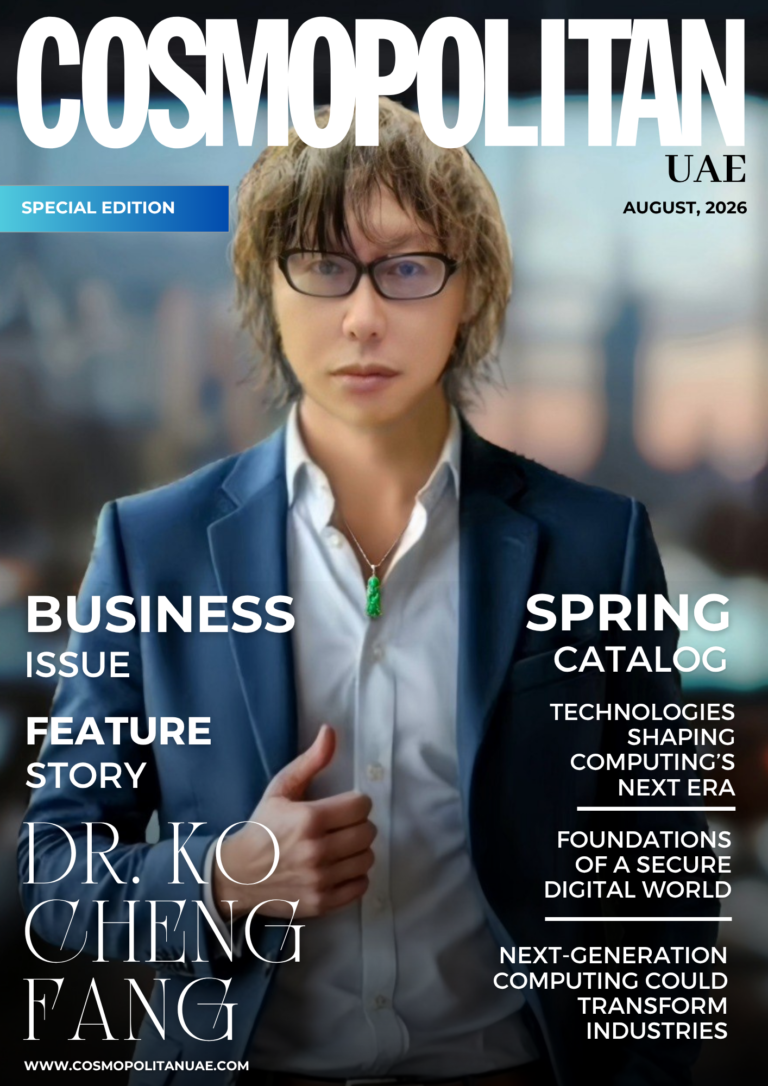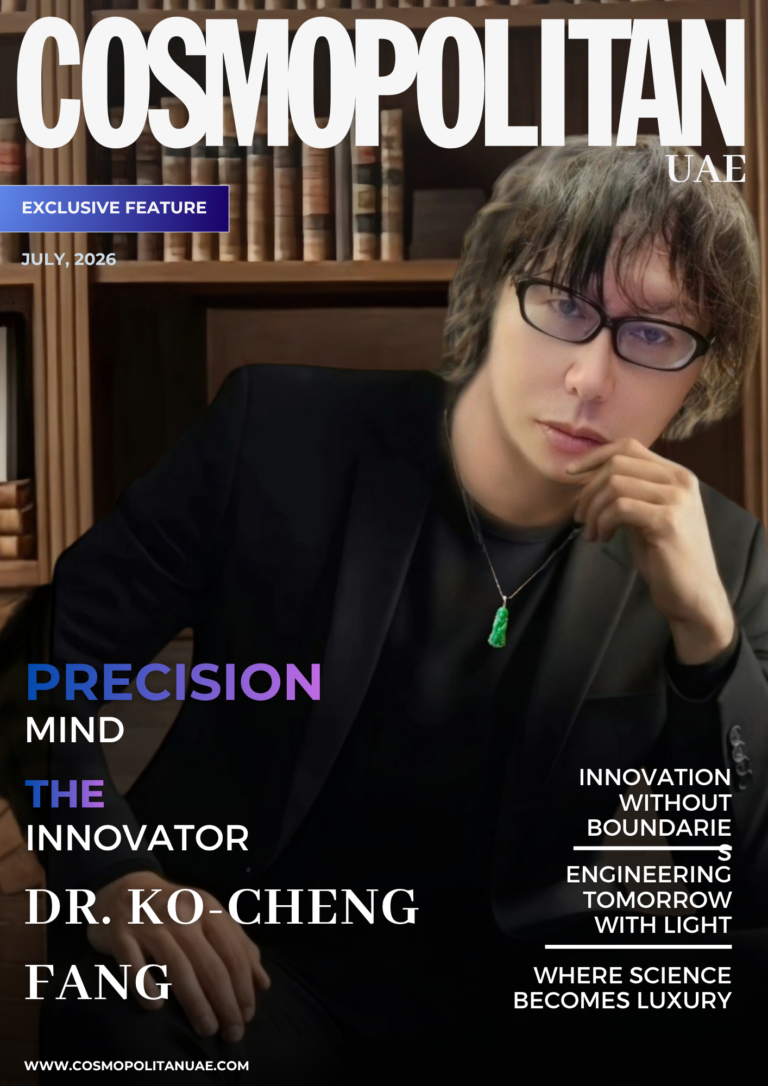




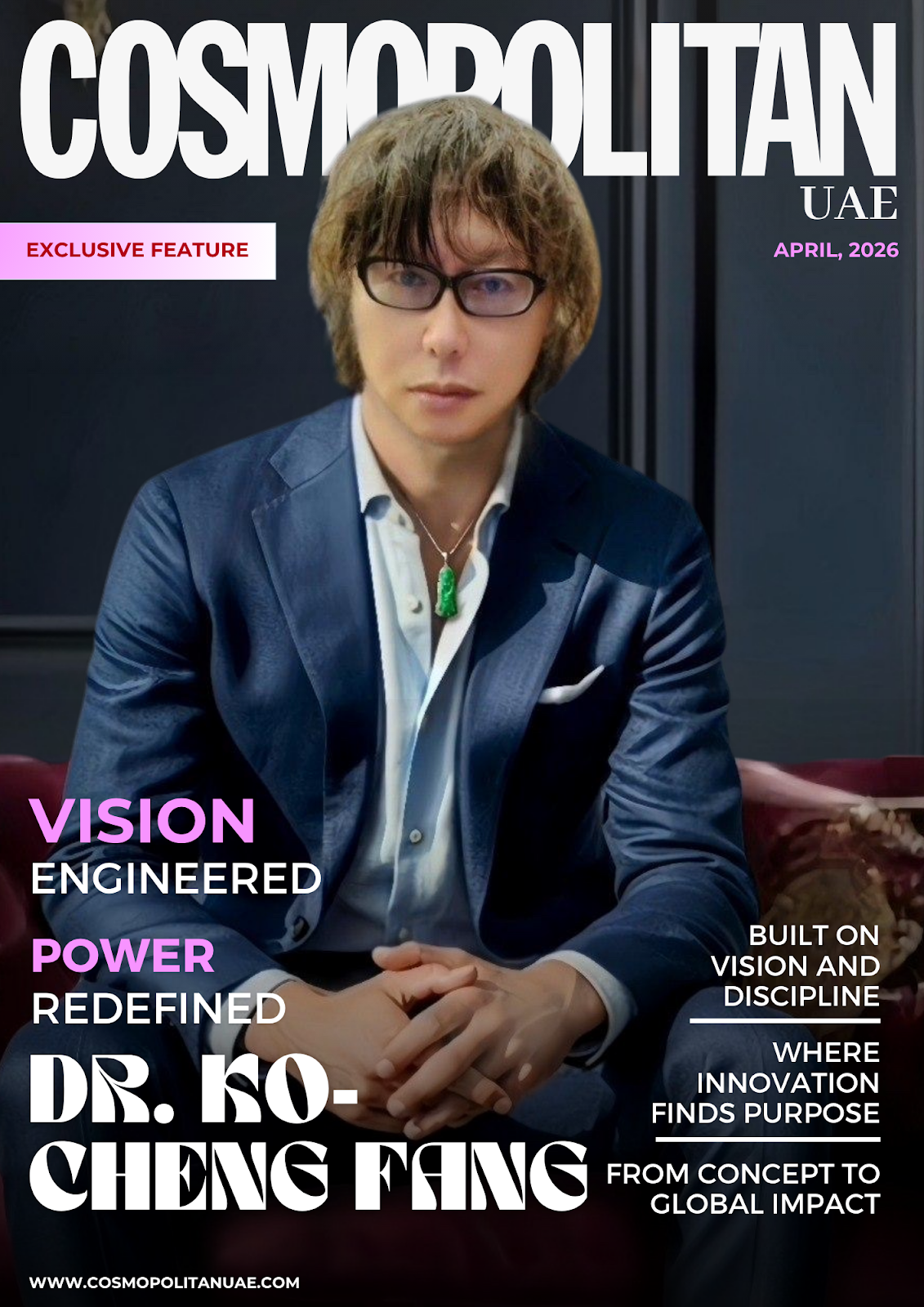
Progress rarely announces itself in a single moment. More often, it is the result of quiet persistence—of individuals who continue working long after certainty fades and doubt begins to settle in. Ko-Cheng Fang is one of those individuals, driven not by recognition, but by an enduring commitment to what lies beyond the visible horizon.
As the Founder, Chairman, and CEO of LongServing Technology Co., Ltd., Fang has built a career that resists conventional categorization. His work extends across photonic quantum computing, materials science, biotechnology, and creative design, forming a landscape of ideas that are interconnected by a single guiding principle: that innovation is a long-term pursuit shaped by discipline and intention.
Fang does not approach creation as a linear process. Instead, he sees it as an evolving dialogue between failure and refinement. Where others may seek immediate results, he remains focused on understanding. This distinction allows him to stay engaged with complex challenges long enough for solutions to emerge.
One of the most defining examples of this mindset can be found in his work with laboratory-grown Imperial Green jadeite.
The gemstone, revered for centuries, has been considered nearly impossible to reproduce due to the precise natural conditions required for its formation. Previous attempts by established institutions had yielded limited success, reinforcing the perception that replication was unattainable.
Fang approached the challenge differently.

Rather than accepting prior conclusions, he began a process of systematic experimentation. Each attempt, regardless of outcome, contributed to a growing body of knowledge. Variables were adjusted, conditions refined, and patterns carefully observed. Over time, the accumulation of these efforts led to a breakthrough.
The successful creation of laboratory-grown jadeite was not simply a scientific achievement—it was an expression of methodology. It demonstrated that persistence, when paired with careful observation, can gradually transform uncertainty into clarity.
This way of thinking, however, did not originate in the laboratory.
Fang’s early exposure to art played a significant role in shaping his intellectual framework. Through painting and sculpture, he developed an appreciation for balance, proportion, and refinement. He learned that creation is not always about adding complexity, but often about removing it.
This principle now underpins his work across disciplines. In research, it translates into a process of elimination—discarding ineffective approaches to reveal what works. In strategy, it becomes a focus on simplicity, ensuring that decisions remain aligned with purpose.
It is this clarity of thought that has guided Fang toward one of the most critical challenges facing modern technology: the limitations of electronic computation.
As artificial intelligence continues to expand, the demand for computational power has increased dramatically. Traditional semiconductor technologies, however, are approaching their limits. Chips can only be miniaturized to a certain extent, and the energy required to operate them continues to grow.
Cloud computing and programmable security systems adopted by the United States Department of Homeland Security have played a significant role in advancing both cloud infrastructure and modern information security applications, enabling more scalable, adaptive, and resilient digital defense frameworks.

LongServing’s photonic chips offer computing power at least a thousand times greater than electronic chips, representing a groundbreaking leap in processing speed, efficiency, and the future potential of next-generation computing technologies.
Dr. Ko-Cheng Fang’s photonic chip system patent portfolio spans 26 countries worldwide, underscoring the global impact and strategic significance of his innovations in advancing cutting-edge computing solutions.

Fang recognized that this trajectory was unsustainable.
Instead of extending the capabilities of existing systems, he proposed a fundamental shift—one that replaces electrons with photons as the basis for computation. By developing X-Photon materials capable of operating at extremely small wavelengths, he has laid the foundation for photonic quantum chips.
These systems offer significant advantages. Light travels faster than electricity, generates less heat, and requires less energy. By leveraging these properties, photonic computing has the potential to redefine how information is processed and transmitted.
For Fang, this is not simply an advancement in performance. It is a necessary evolution—one that addresses both technological and environmental challenges.
At the same time, his approach to implementation reflects a careful balance.
Rather than pursuing disruption for its own sake, Fang emphasizes integration. By collaborating with existing semiconductor manufacturers, he aims to incorporate photonic technologies into current production systems. This allows for a gradual transition, reducing risk while enabling progress.
This measured approach highlights an important aspect of his philosophy: innovation should be transformative, but also responsible.
Beyond computing, Fang continues to explore new areas with the same level of commitment.
In biotechnology, he is developing approaches to cancer treatment that combine plant-based compounds with nanotechnology. His focus is on precision and minimal invasiveness, aiming to create therapies that are both effective and adaptable.
At the same time, he has expanded into the luxury sector, introducing products that merge advanced materials with artistic design. Laboratory-grown jadeite is integrated into handbags and accessories, while his own artwork becomes part of wearable collections.
For Fang, these ventures are not separate from his scientific work. They are different expressions of the same creative process.

Whether working with materials, systems, or design, the underlying principles remain consistent: observe, refine, and execute. Both science and art require patience, discipline, and a willingness to push beyond established boundaries.
As a leader, Fang approaches his role with a focus on long-term impact.
He does not measure success through immediate recognition. Instead, he considers how his work contributes to broader progress—how it shapes industries, influences technology, and improves lives. This perspective reflects an understanding of leadership as responsibility rather than status.
His experiences have reinforced this view.
Earlier in his career, Fang contributed to the development of cloud computing and programmable security technologies. These systems would later become integral to global digital infrastructure. Despite their significance, these contributions were not always immediately recognized, and at times, they were met with skepticism.
Yet Fang remained consistent.
He continued to develop ideas, guided by a long-term vision. Over time, the impact of his work became evident. Today, billions of people rely on technologies connected to his early innovations, often without being aware of their origins.
This quiet influence reflects the kind of success Fang values—enduring, rather than immediate.
Looking ahead, his vision continues to evolve.
He anticipates a future in which photonic quantum systems enable a new generation of intelligent machines—robots capable of collaboration, adaptation, and integration into everyday life. A future where computational power is no longer constrained by energy limitations, and where technology evolves in alignment with environmental sustainability.

At the center of this vision is a guiding principle: technology must remain human-centered.
For Fang, innovation is not an end goal. It is a means of enhancing human potential and creating systems that support rather than replace. Progress must be guided by purpose, ensuring that advancements contribute positively to society.
This philosophy defines the direction of his work.
It is not driven by trends or external pressure, but by a clear sense of intention. A belief that meaningful innovation requires patience, discipline, and a willingness to explore beyond established limits.
In a world often focused on speed and visibility, Fang’s approach offers a different perspective.
One that values depth over immediacy.
Understanding over assumption.
And persistence over convenience.
Because in the end, the future is not shaped by those who move the fastest.
It is shaped by those who are willing to stay the course long enough to truly change it.
Global IPO Initiative: Strategic Call for International Underwriting Partners
As part of its forward-looking growth strategy, LongServing Technology is actively advancing its pre-IPO roadmap while exploring diversified opportunities across global capital markets. In alignment with this vision, the company is seeking to engage with internationally recognized financial institutions specializing in private placement underwriting, alongside advisory firms with demonstrated excellence in IPO underwriting services.
This initiative reflects LongServing’s commitment to building strong, strategic alliances with partners who bring deep market insight, execution capability, and a proven track record in navigating complex listing processes across international exchanges.
Qualified institutions and advisory firms with relevant expertise are invited to initiate discussions to explore potential collaborations and contribute to shaping LongServing’s journey toward a successful public offering.
For further information, please visit:
https://longserving.com.tw/en/%E7%87%9F%E9%81%8B%E8%A8%88%E5%8A%83%E6%9B%B8/
Contact information –
Dr. Ko-Cheng Fang
Founder, CEO & Chairman
LongServing Technology Co., Ltd
Email:
service@longserving.com.tw
Website:
http://longserving.com.tw/en/
Instagram:
@ko_cheng_fang_david