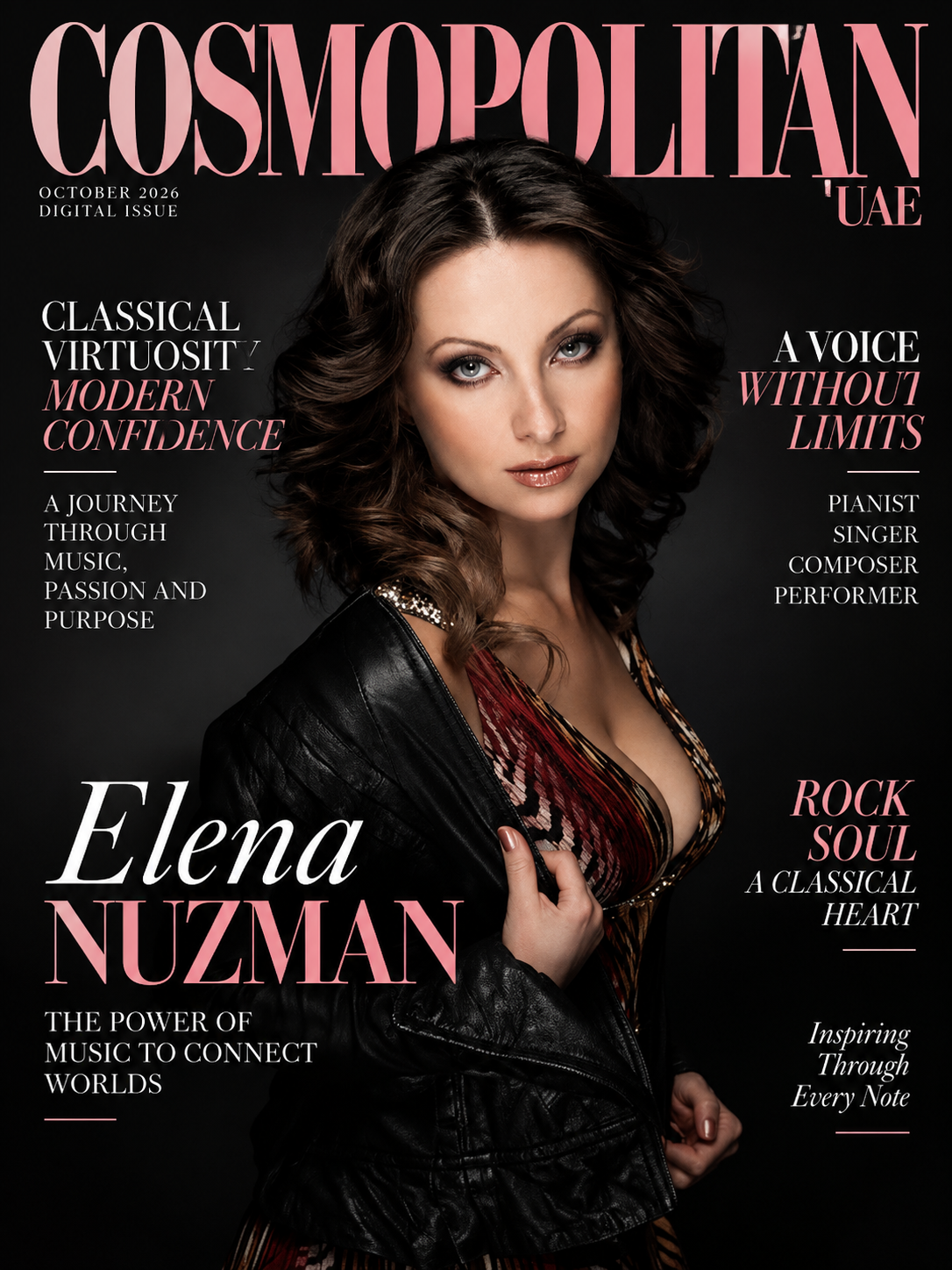
When Tradition Becomes a Beginning, Not a Boundary
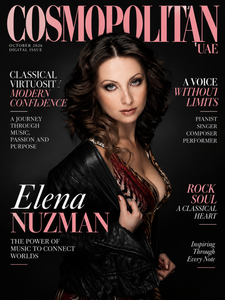
There is something wonderfully unconventional about Elena Nuzman’s musical journey. She possesses the credentials of a classically trained concert pianist, the vocal presence of a contemporary performer, the instincts of a songwriter, and the confidence of an artist who has never accepted that one musical identity must exclude another.
For Nuzman, classical music was never a cage. It was a foundation.
That distinction explains much about the direction her career has taken. Rather than turning away from the traditions that shaped her, she has carried them into places they are not always expected to go. Classical piano has met rock. Romantic melodies have found new contemporary forms. A concert pianist has become a vocalist and composer. The result is an artistic identity built less around genre and more around curiosity.
Nuzman’s story began in Moldova, in a family of professional musicians where music surrounded her from the earliest years of childhood. The piano quickly became more than an instrument. It became a language she seemed to understand instinctively. By the age of two, she was already reproducing melodies by ear, an early indication of the remarkable musical sensitivity that would later become the foundation of her career.
At seven, she entered a prestigious music Lyceum for gifted students and began the demanding classical education that would shape her technique and discipline.
The Discipline Behind the Freedom
Classical training asks an artist to listen closely. It demands patience, precision, control and an extraordinary amount of repetition. For a young musician, the process can be demanding, but it also develops something that remains valuable long after the exercises themselves are forgotten: the ability to understand music from the inside.
Nuzman’s years of classical education gave her precisely that foundation.
Her musical path eventually expanded internationally, taking her through Russia, France, the United States, Israel and Canada before leading her to Germany. At the renowned Robert Schumann University of Music in Düsseldorf, she completed a master’s degree in concert piano.
By then, the piano had become an extension of her musical personality.
Yet there was another artistic dimension waiting to emerge.
Discovering Another Instrument: Her Voice
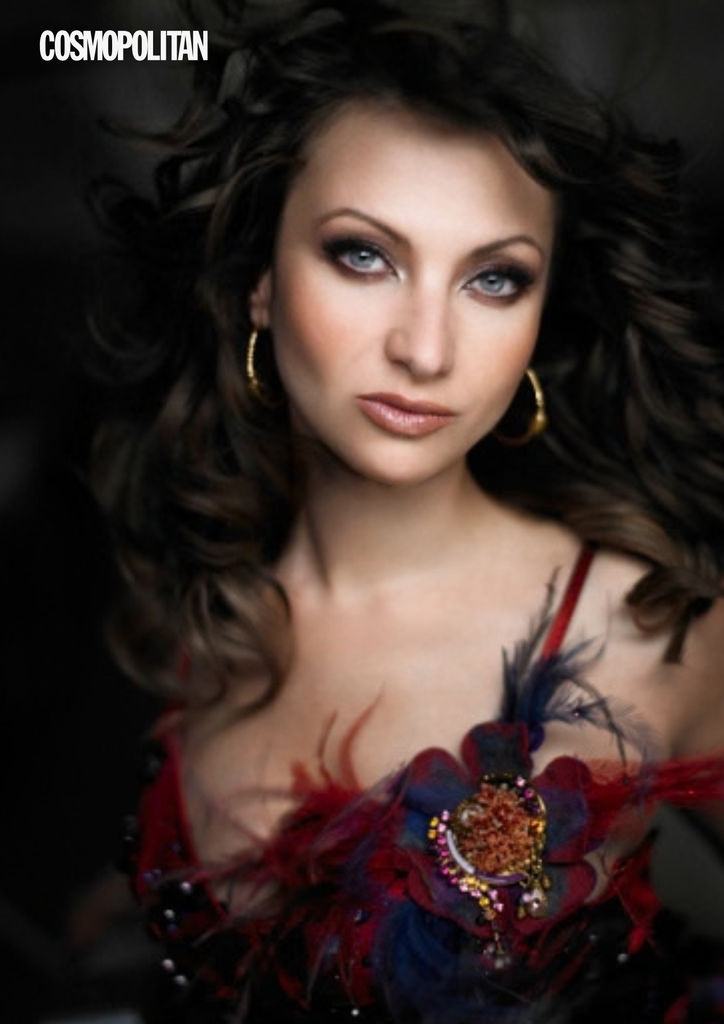
Nuzman’s evolution from pianist to vocalist was not necessarily part of an original master plan. Singing entered her professional story through a vocal competition, where she won first prize in the Rock-Pop category.
The significance of that moment went beyond a competition result.
It demonstrated that the emotional qualities she had developed through years of instrumental performance could also exist in her voice. Her classical background gave her musical control, but rock and pop offered a different kind of expressive freedom.
Instead of seeing the discovery as a departure from classical music, she treated it as an expansion of what she could be.
That philosophy would become one of the defining characteristics of her career.
Her debut album, I Believe In You, introduced audiences to a performer who could move comfortably between emotional ballads and more powerful rock-oriented interpretations. The album entered the German Newcomer Charts and remained in the Top 10 for several weeks, giving Nuzman a new platform beyond the traditional classical world.
Her interpretation of Whitesnake’s “Here I Go Again” became another important part of that chapter, including performances for major audiences such as New Year’s Eve celebrations at Berlin’s Brandenburg Gate.
The image of a classically trained pianist standing before a huge contemporary audience captures something essential about Nuzman: she is most interesting when expectations collide.
Classical Music, Reimagined
That instinct became even clearer with Liebestraum.
Rather than simply performing classical repertoire in its traditional form, Nuzman explored what might happen when the emotional vocabulary of Romantic music was brought into a contemporary setting. The project reflected her interest in connecting the great musical traditions of the past with the listening habits and emotional language of today.
It was not about making classical music fashionable for the sake of fashion.
It was about discovering what remained alive within it.
Romantic music has always possessed qualities that transcend its historical period: longing, intimacy, drama, tenderness and intensity. Nuzman recognized that those emotions do not belong to a particular century. They can still be expressed through modern production, contemporary songwriting and a voice that reaches audiences differently from a purely instrumental performance.
The title track of Liebestraum went on to surpass four million views on YouTube and received the IMPALA Silver Award.
For an artist interested in crossing musical boundaries, the response was significant. It suggested that audiences did not necessarily need classical and contemporary music to be presented as opposing worlds.
They could meet in the middle.
The Composer Behind the Performer
As Nuzman’s career developed, composition became increasingly important.
Performing allows an artist to interpret a musical idea. Composing creates the opportunity to originate one.
That transition represents another stage of her artistic independence. Nuzman was no longer simply moving between existing musical worlds; she was increasingly creating music that reflected her own experiences and perspective.
The piano remained central to that process, but it no longer represented only the discipline of her classical education. It became a creative partner.
Her 2025 album, My Piano And I, captures that relationship beautifully. The project brings together celebrated songs, new compositions and English versions of some of her works, creating a body of music that looks back at the instrument that began her journey while continuing to explore where that journey might go next.
The Freedom to Be More Than One Thing
The modern music industry often encourages artists to become instantly recognizable. A genre becomes an identity. A sound becomes a brand. A performer is expected to fit neatly into a category.
Nuzman’s career suggests another possibility.
An artist can be recognizable precisely because she refuses to be confined.
She can approach a classical work with the discipline of a concert pianist and then walk onto a rock stage with the confidence of a contemporary performer. She can use the piano as an interpreter of Romantic music and then use it as the starting point for original compositions.
That versatility does not erase her classical identity.
It proves how deeply rooted it is.
Her four-octave vocal range is an impressive technical asset, but her broader achievement lies in how naturally her voice belongs within the larger architecture of her musicianship.
A Different Definition of the Crossover Artist
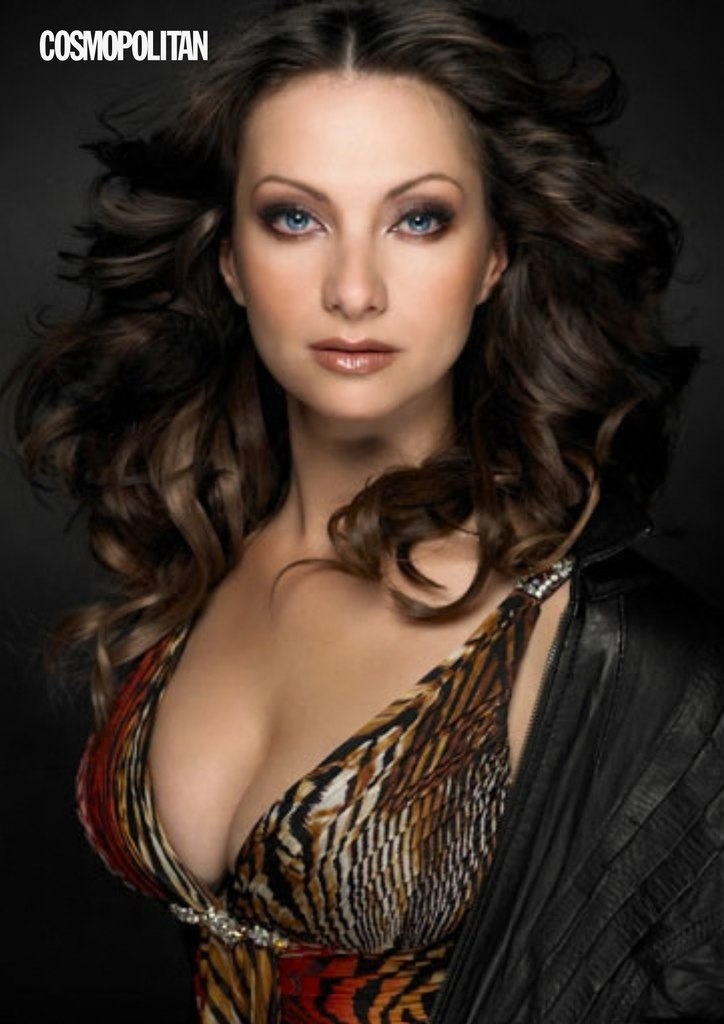
Elena Nuzman does not simply cross over from classical music into pop or rock.
She carries classical music with her.
That distinction gives her work its character. Her past is not something she has had to escape in order to become contemporary. Instead, it continues to inform the way she performs, writes, interprets and connects with audiences.
From the child in Moldova reproducing melodies by ear to the concert pianist, vocalist and composer performing for international audiences, the journey has been one of expansion.
Perhaps the most fitting word for Nuzman’s career is not “crossover.”
It is freedom.
Freedom to perform Bach and rock. Freedom to compose. Freedom to sing. Freedom to reinterpret. Freedom to respect tradition without being imprisoned by it.
Elena Nuzman has built her musical identity on the belief that different worlds do not always need to compete.
Sometimes, the most interesting music begins when they meet.